Under 8 CFR 103.2(b)(3), anyone who calls themselves a translator can sign a certificate of accuracy and competence, and USCIS will accept it. My signature as an ATA-certified translator works, but so does the signature of someone who has never translated a legal record. The two certificates look identical.
I believe that needs to change. The Department of Homeland Security must amend 8 CFR 103.2(b)(3) to require third-party certified translators. Translators and the #AILA should advocate for it together.
I’m an ATA-certified Spanish-to-English translator with 8,000 legal projects and over 6M words under my belt. Much of that work involves civil registry, court, and immigration records, so this rule governs what I do daily.
The rule checks the paperwork. It never checks the person
USCIS asks for a complete English translation and a statement certifying accuracy and competence, along with a signature and contact information. That’s it.
What it doesn’t ask for:
- a credential of any kind
- an exam
- a searchable registry
- third-party verification that the signer is competent
The words “competent” and “accurate” cover it all. The signer is the only one who decides whether these terms apply. A relative or a bilingual coworker can sign it. Nobody checks.
Everything else in an immigration file gets scrutinized. Applicants submit biometrics. Civil records carry official seals. Yet the English version an adjudicator reads has nothing backing it up except the signer’s own word.
Certification costs real money, yet the rule values it at zero
ATA certification is a serious commitment. The exam costs over $500, and the pass rate is under 20%. If you fail, there is no money-back guarantee. Many experienced linguists fail it multiple times. Maintaining it requires ongoing continuing education and annual dues of $200+.
I paid for that exam. I keep paying to maintain my credential because it proves someone other than me vetted my work. Then I sign a USCIS certificate, and the agency gives my signature the exact same weight as someone who is completely unvetted.
What does certification mean if a federal agency treats an unvetted amateur and a certified professional the same?
The AI chop shops and privacy risks
Now, a new crop of volume platforms is exploiting this loophole. They charge applicants as little as $25 a page (while paying translators about half that) by dumping confidential personal records into automated AI formatting and machine translation engines.
Should sensitive personal and asylum records be uploaded into unvetted systems just to produce cheap output with a rubber-stamped signature? The honor system is inviting it.
Immigrants and attorneys pay for the honor system
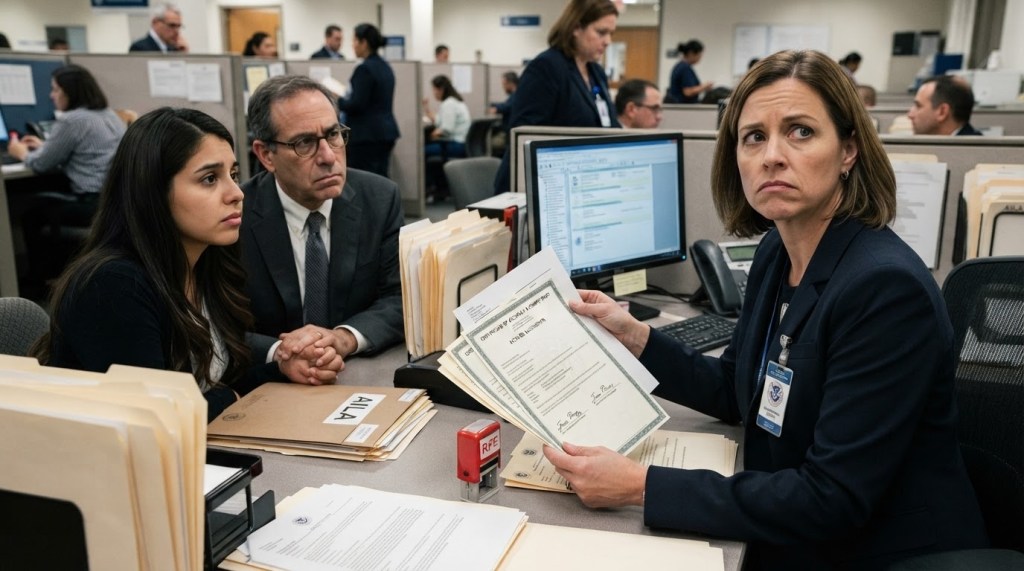
RFEs routinely follow unvetted translations that omit essential elements: stamps, seals, handwritten notes, and registry numbers. Trained legal translators account for every element edge to edge. When untrained signers skip them, USCIS pauses the case.
Every RFE adds to processing backlogs and burns non-billable attorney hours to resolve. In asylum cases, the wrong word in a declaration or police record can be flagged as an inconsistency, jeopardizing an applicant’s credibility and future.
Wouldn’t a certification requirement hurt access for families? Absolutely not. An RFE and months of delay cost far more in legal fees than hiring a vetted professional once.
International bodies like the UN already require verified credentials for official matters; U.S. immigration filings deserve the same evidentiary standard.
An amended rule is simple:
- Require translation by a professional certified by a recognized third-party body (such as the ATA).
- Include the credential number on the certificate so USCIS officers can verify it.
A public call for action
To my fellow translators: raise this rule with the immigration attorneys you serve. Most assume certification is already required.
To immigration attorneys: you see the RFEs and backlogs firsthand. Your voice carries immense weight with DHS.
To the American Translators Association and its Advocacy Committee: please lead a coordinated petition urging DHS to amend 8 CFR 103.2(b)(3). The credential you built deserves a regulation that respects it.
If you’re a translator or immigration attorney who has dealt with the fallout of unvetted translations, let’s make some noise.
What has this loophole cost you or your clients?


Leave a Reply